
Hang The Door
MEKATRON covers all what is required on a door to make it operational, functional as per design intent, safe and secure as per latest standards and building codes.
Hinges & Accessories
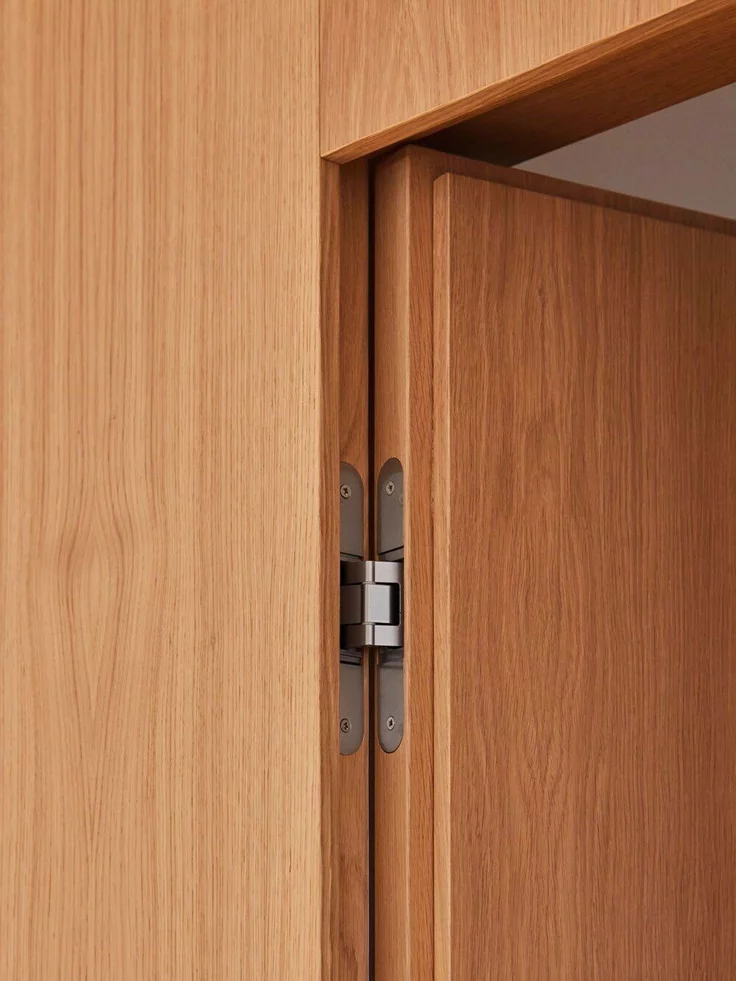
BS EN 1935 Single-axis hinges
This standard provides details on product types, classification by use, test cycles, door mass, corrosion resistance, as well as definitions, product performance requirements, test apparatus, test methods and marking of products.
Classification
BS EN 1935 classifies door furniture by using an 8 digit coding system
Digit 1 - Category of use
Four categories of use are identified:
– grade 1: light duty
– grade 2: medium duty – grade 3: heavy duty
– grade 4: severe duty
Digit 2 - Durability
Three grades are identified for single-axis hinges manufactured to this European standard:
– grade 3: 10 000 test cycles, for light duty hinges on windows only
– grade 4: 25 000 test cycles, for light duty hinges on windows and doors
– grade 7: 200 000 test cycles, for medium. heavy and severe duty hinges on doors only
Digit 3 Test door mass
| Test Door Mass Grade | Door Mass |
|---|---|
| 0 | 10 kg |
| 1 | 20 kg |
| 2 | 40 kg |
| 3 | 60 kg |
| 4 | 80 kg |
| 5 | 100 kg |
| 6 | 120 kg |
| 7 | 160 kg |
Digit 4 Suitability for fire/smoke door use
– grade 0: not suitable for fire/smoke resistant door assemblies
– grade 1: suitable for fire/smoke resistant door assemblies s
Digit 5 Safety
Single-axis hinges are required to satisfy the essential requirements of safety in use. Therefore, only grade 1 is identified.
Digit 6 Corrosion resistance
Five grades of corrosion resistance are identified in accordance with EN 1670:
– grade 0: no defined corrosion resistance. – grade 1: mild resistance.
– grade 2: moderate resistance.
– grade 3: high resistance.
– grade 4: very high resistance.
Digit 7 Security
Two grades of security are identified for single-axis hinges:
– grade 0: not suitable for use on burglar-resistant door assemblies
– grade 1: suitable for applications requiring a degree of security. Annex C of this European standard details the hinge grade to use for the level of security required.
Digit 8 Hinge grade
Fourteen grades are identified in this European standard and are detailed in Table 2 below. The full classification is shown in the standard.
| Hinge Grade | Usage | Test Cycles | Door Mass |
|---|---|---|---|
| 1 | Window | 10 000 | 10 kg |
| 2 | Window | 10 000 | 10 kg |
| 3 | Window/Door | 25 000 | 20 kg |
| 4 | Door | 200 000 | 20 kg |
| 5 | Window | 10 000 | 40 kg |
| 6 | Window/Door | 25 000 | 40 kg |
| 7 | Door | 200 000 | 40 kg |
| 8 | Window | 10 000 | 60 kg |
| 9 | Window/Door | 25 000 | 60 kg |
| 10 | Door | 200 000 | 60 kg |
| 11 | Door | 200 000 | 80 kg |
| 10 | Door | 200 000 | 100 kg |
| 10 | Door | 200 000 | 120 kg |
| 10 | Door | 200 000 | 160 kg |
BS EN 12051 Door and window bolts
This standard details performance requirements and test methods in relation to use (abuse), durability, fire resistance, safety in use, corrosion resistance, and security, with information on classification and marking.
Classification
BS EN 12051 classifies door and window bolts by using a 7-digit coding system.
Digit 1 - Category of use
Four grades are specified for category of use:
– grade 1: low frequency of use by those with a high incentive to exercise care.
– grade 2: medium frequency of use, primarily by those with some incentive to exercise care
– grade 3: high frequency of use by the public and others with little incentive to exercise care.
– grade 4: subject to frequent violent usage
Digit 2 - Durability (no. of test cycles)
Four grades are specified as follows:
– grade 1: 2 500 cycles
– grade 2: 5 000 cycles
– grade 3: 10 000 cycles
– grade 4: 50 000 cycles
Digit 3 - Door mass
No requirement
Digit 4 - Fire resistance
Two grades are identified:
– grade 0: not suitable for fire/smoke resistant door assemblies
– grade 1: suitable for fire/smoke resistant door assemblies subject to satisfactory
assessment of the contribution of the single- axis hinge to the fire resistance of the specified fire/smoke door assemblies.
Digit 5 - Safety in use
Two grades are identified:
– grade 0: no requirement
– grade 1: products shall be capable of operating with a
side load of 250 N on the bolt, and also after a side load of 1000 N has been applied.
Digit 6 - Corrosion resistance
Five grades of corrosion resistance are identified
according
– grade 0: – grade 1: – grade 2:
– grade 3: – grade 4:
to BS EN 1670.
no defined corrosion resistance
mild resistance (normally dry interiors) moderate resistance (interiors subject to condensation)
high resistance (damp interior/exterior) very high resistance (polluted exterior – industrial/coastal)
Digit 7 - Security
Five grades of security are identified with figures for end load on shoot, resulting projection, resistance to sawing, and sideload on shoot.
Digit 8 Hinge grade
| Hinge Grade | Usage | Test Cycles | Door Mass |
|---|---|---|---|
| 1 | Window | 10 000 | 10 kg |
| 2 | Window | 10 000 | 10 kg |
| 3 | Window/Door | 25 000 | 20 kg |
| 4 | Door | 200 000 | 20 kg |
| 5 | Window | 10 000 | 40 kg |
| 6 | Window/Door | 25 000 | 40 kg |
| 7 | Door | 200 000 | 40 kg |
| 8 | Window | 10 000 | 60 kg |
| 9 | Window/Door | 25 000 | 60 kg |
| 10 | Door | 200 000 | 60 kg |
| 11 | Door | 200 000 | 80 kg |
| 10 | Door | 200 000 | 100 kg |
| 10 | Door | 200 000 | 120 kg |
| 10 | Door | 200 000 | 160 kg |